Context
I presented a PechaKucha at the EPIC2019 conference in Providence, RI, US, where the overarching theme was Agency: What does it mean to have agency in an increasingly automated world? This question led me to reflect on my own humanity as a researcher and how to break free from the auto-pilot cycle of collect-analyze-deliver, especially while working for a big-tech client.
🧃 PechaKucha is a quick storytelling format in which a presenter shows 20 slides (usually images) for 20 seconds per slide, accompanied by spoken narration.

Summary
This short story happens on the connection between my researcher and photographer sides during an ethnography trip to rural Brazil. Initially focused on studying internet connectivity, the experience showed me human connection. Photography creates connection between people, much like ethnography, and both fields interlace in a deeper level than documenting fieldwork. Visual documentation is as valuable as a conversation; and photography enables both analysis and creativity in a researcher, by sharpening the observer’s eye to both content and context. Embracing photography as a creative research tool opens new ways for researchers to engage with their subjects, blending analytical rigor with human connection.
See the presentation below.
🧃 This slideshow is adapted to show the narrated text.














📄 Text version
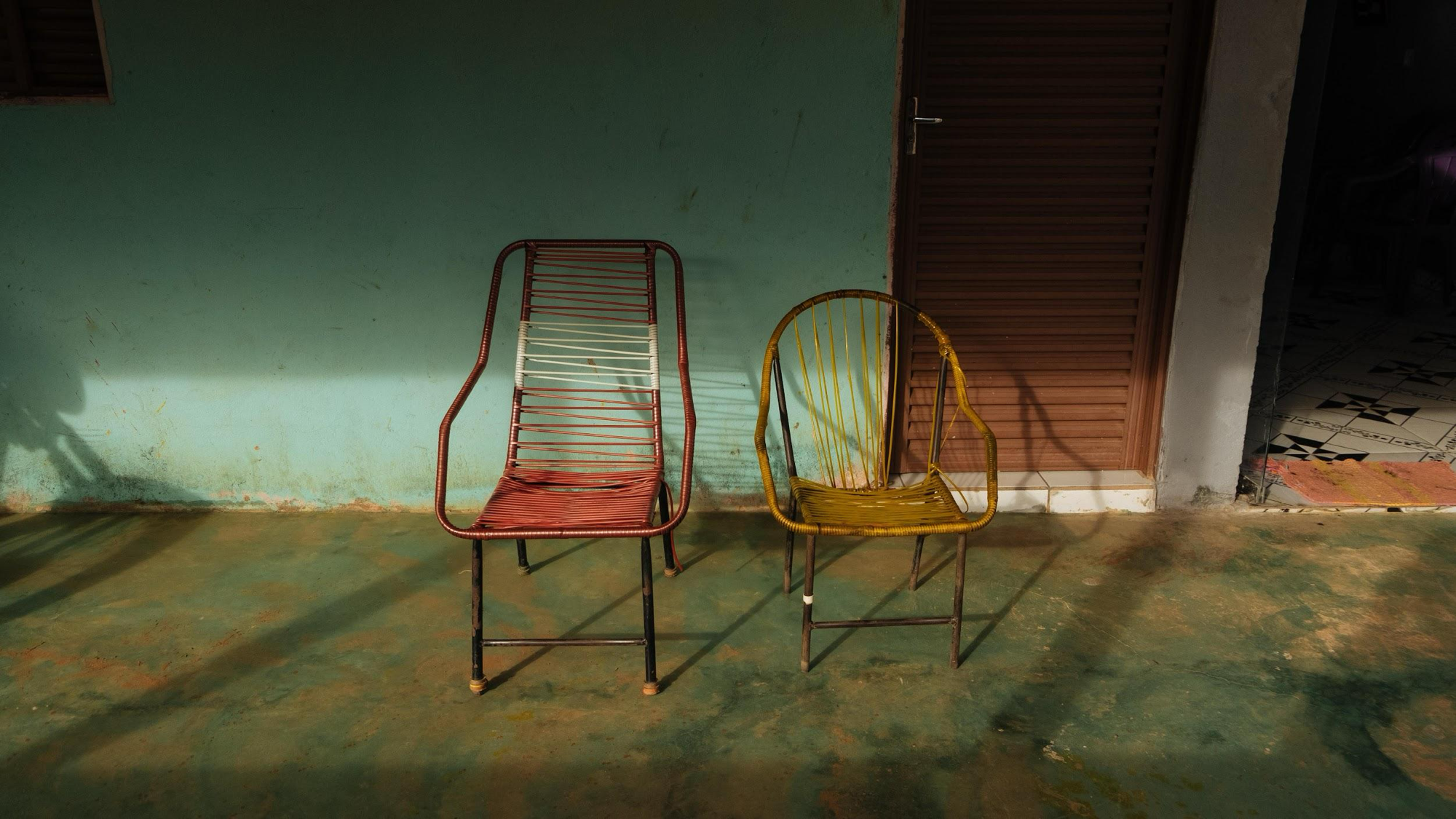
- Photography has been a passion for a few years, to the point that my mind sees in pictures. Any light hitting a surface can become a beautiful image, and I often experience grief over a missed photograph.
- I bond with the moments I live by observing and framing what has a particular meaning to me. For instance, I love chickens! They were a part of my childhood, and I see their feeding frenzy as a beautiful image.
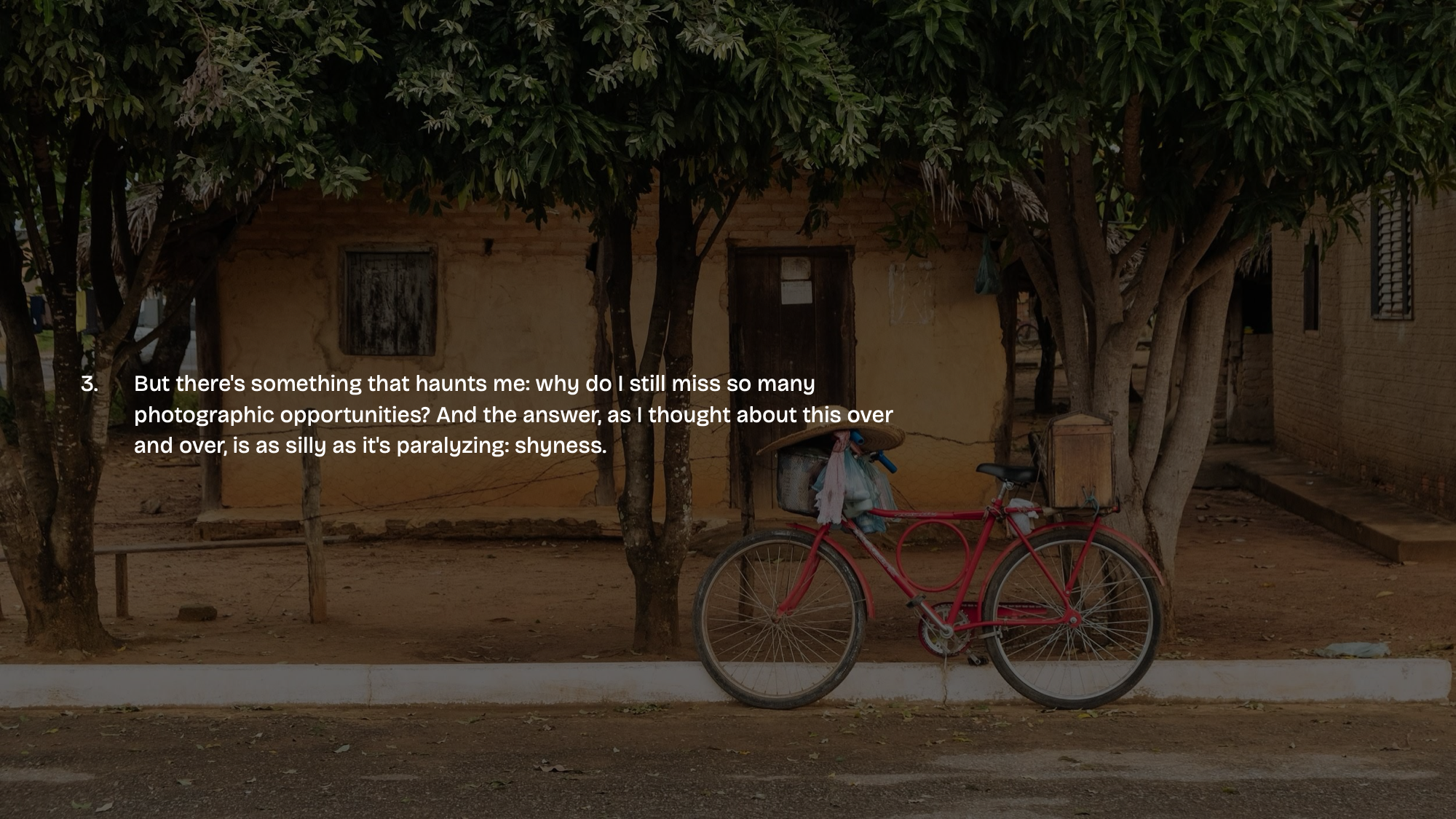
- But there’s something that haunts me: why do I still miss so many photographic opportunities? And the answer, as I thought about this over and over, is as silly as it’s paralyzing: shyness.
- Most of my missed pictures involved people, as I avoid disturbing others – in fact, I run away from people ever noticing me being there. I observe from afar, waiting for moments to unveil themselves. And this passive “technique” usually fails me, as magical moments are rare.
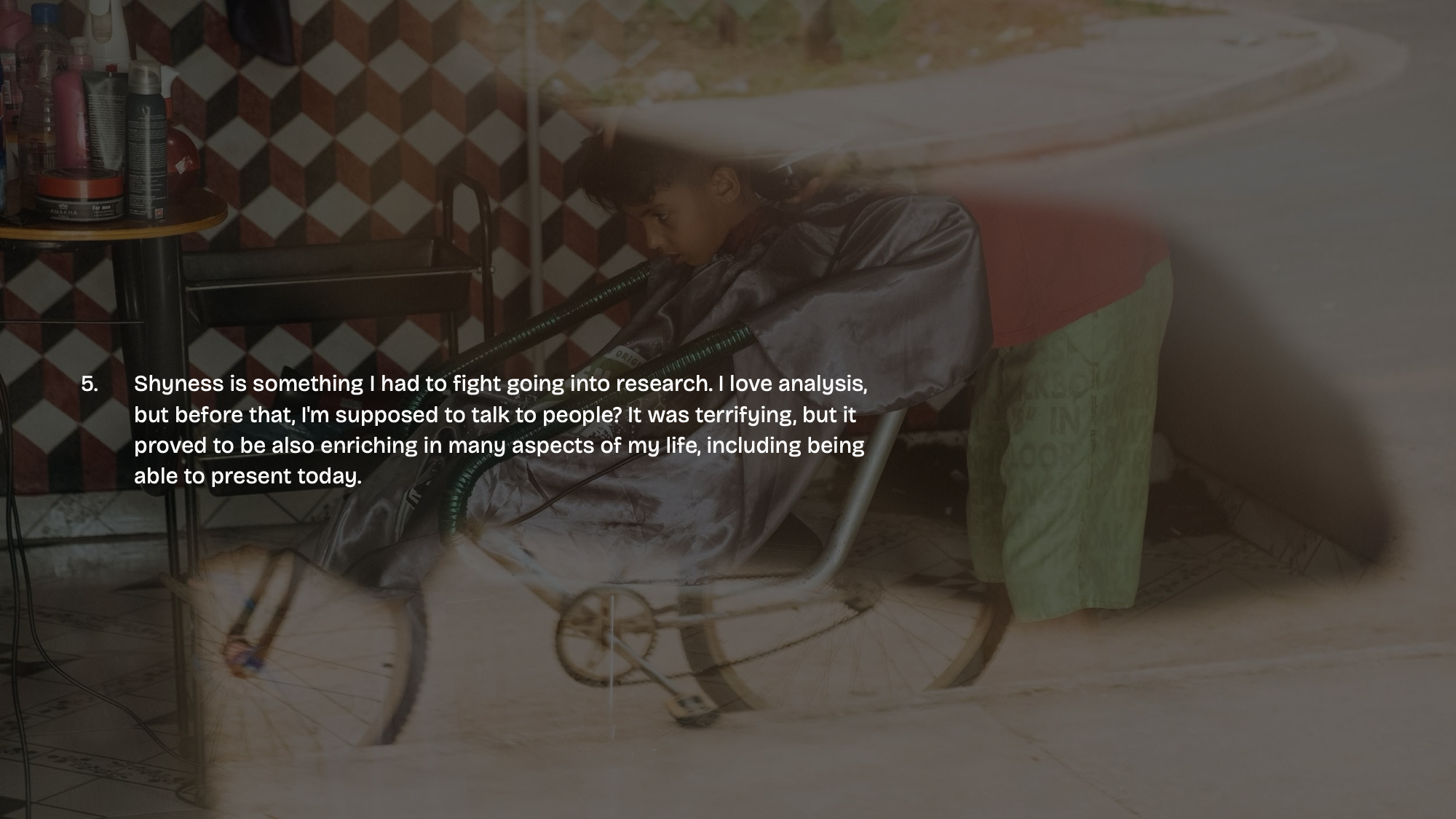
- Shyness is something I had to fight going into research. I love analysis, but before that, I’m supposed to talk to people? It was terrifying, but it proved to be also enriching in many aspects of my life, including being able to present today.
- I spent years not connecting research with photography. I did register, what’s a researcher without blurry iPhone photos? But it was an automatic process of click and go, usually in a hurry, without thinking of the body of pictures as an integral part of the project.
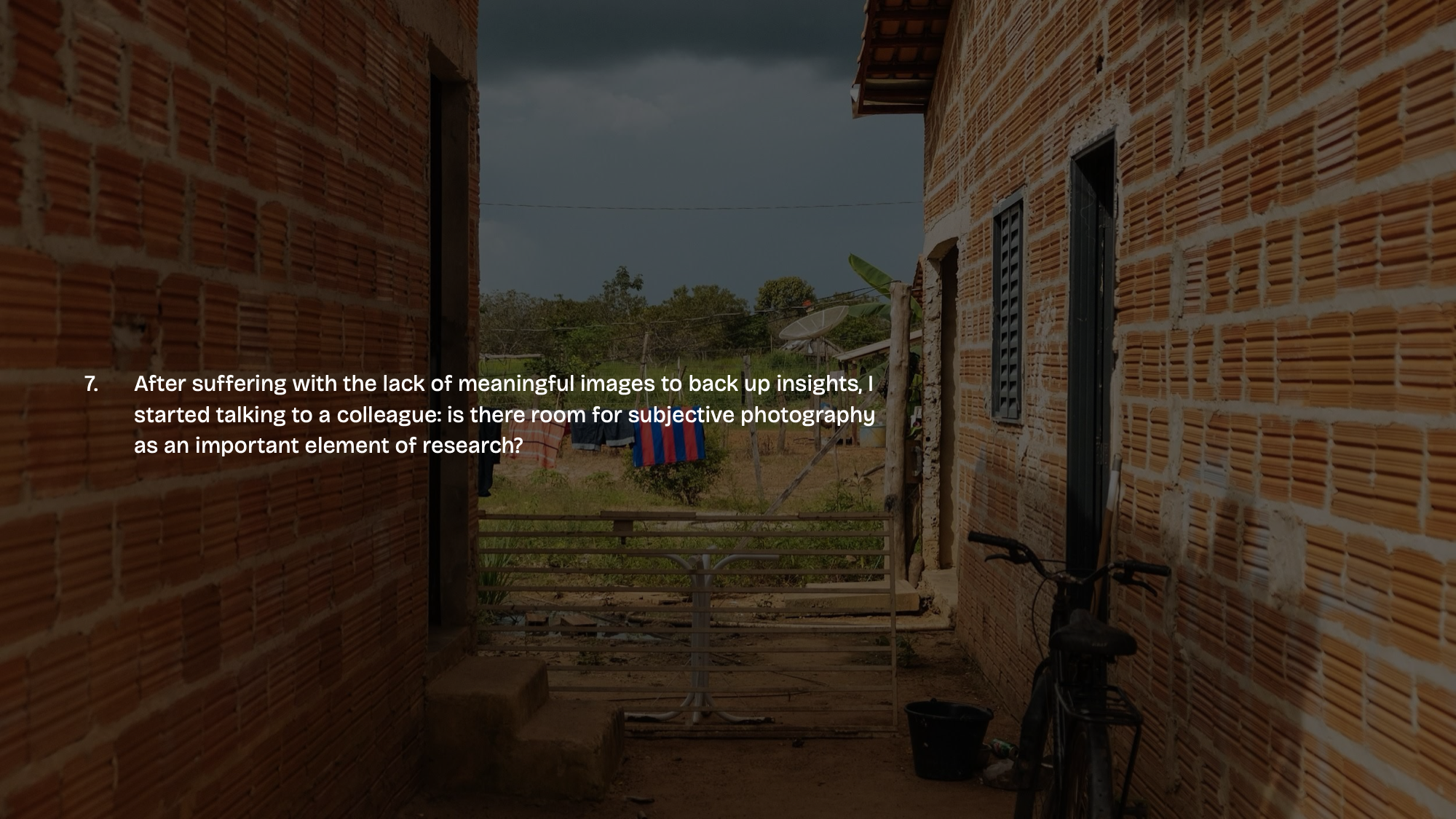
- After suffering with the lack of meaningful images to back up insights, I started talking to a colleague: is there room for subjective photography as an important element of research?
- A person’s gaze creates meaning over a situation, and that, to me, is the beauty of photography: it’s completely human. The subjective interpretation of a scene cannot be mimicked by anything that’s not agent, self-aware, and reflexive.
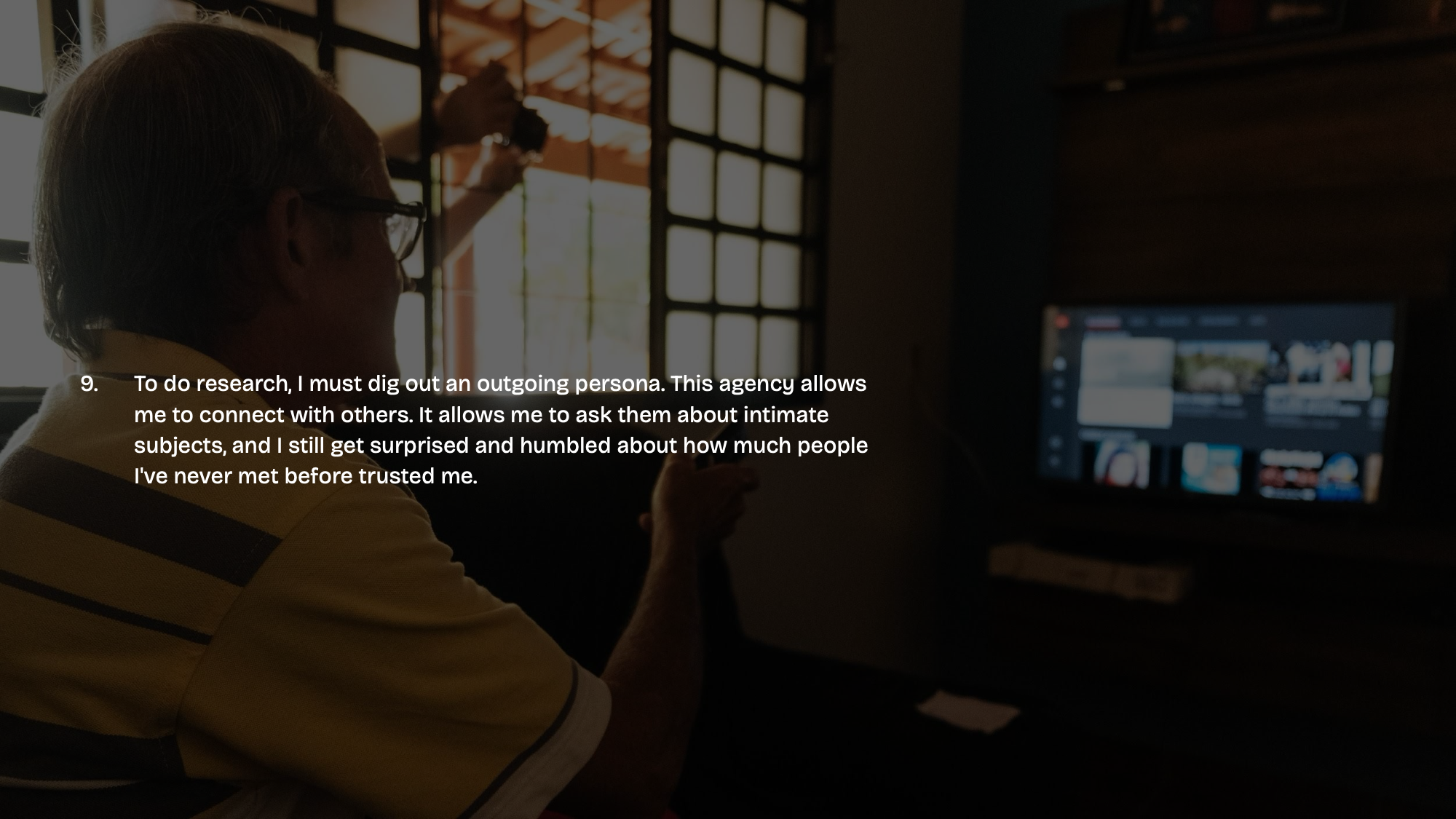
- To do research, I must dig out an outgoing persona. This agency allows me to connect with others. It allows me to ask them about intimate subjects, and I still get surprised and humbled about how much people I’ve never met before trusted me.
- I realized that to capture a powerful image containing people, that agency is also necessary: it involves the courage of reaching out to others. It makes it possible to create an image that conveys more than simple fortuity, but that also carries a glimpse into human connection.
- We start fieldwork with a hypothesis, and during that period analysis already begins, when patterns start forming. Can’t we also analyse visually, using our own gaze to add meaning to the evidence we collect? Shouldn’t photography become a project within a project, that would evolve as fieldwork does?
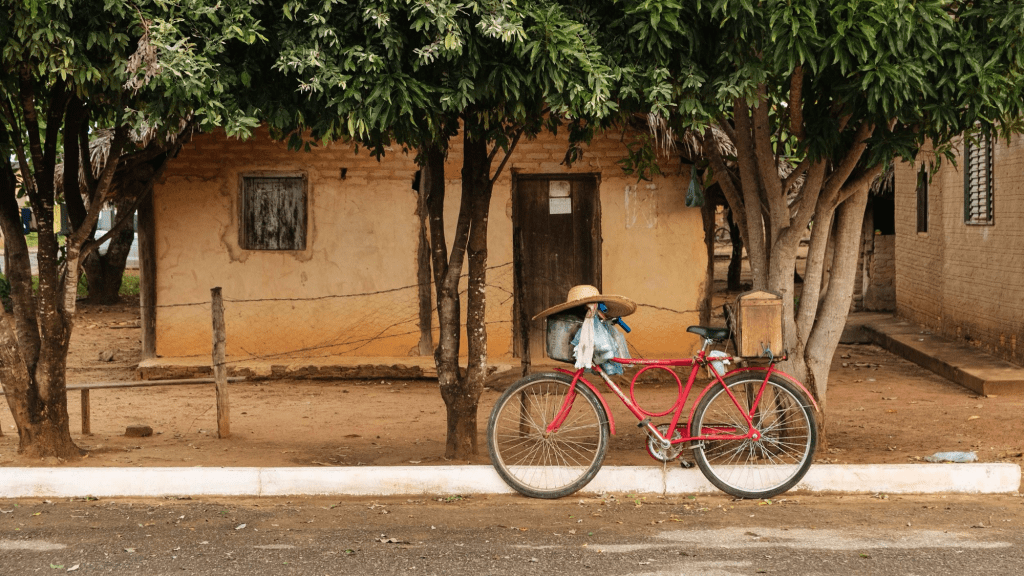
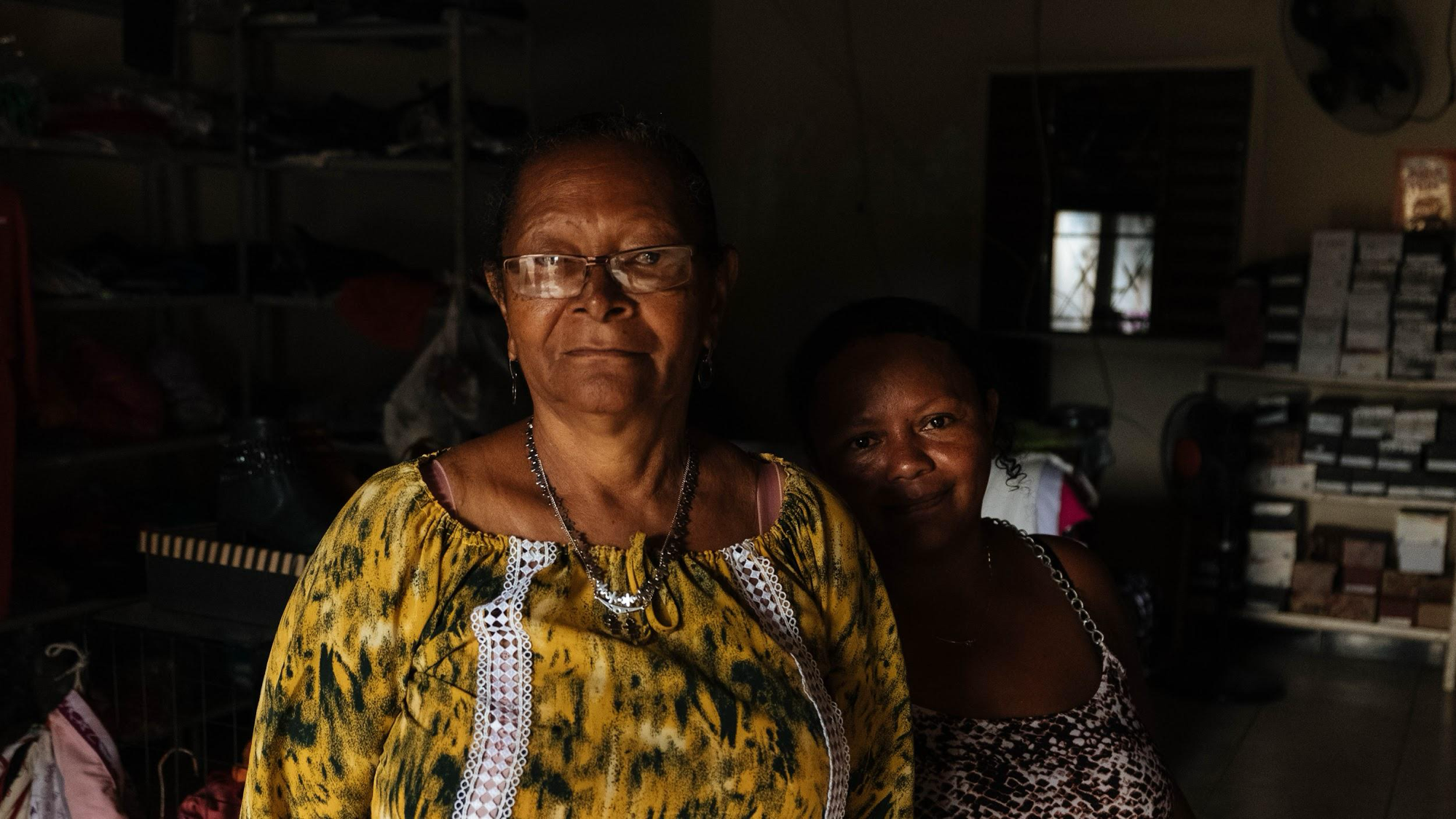
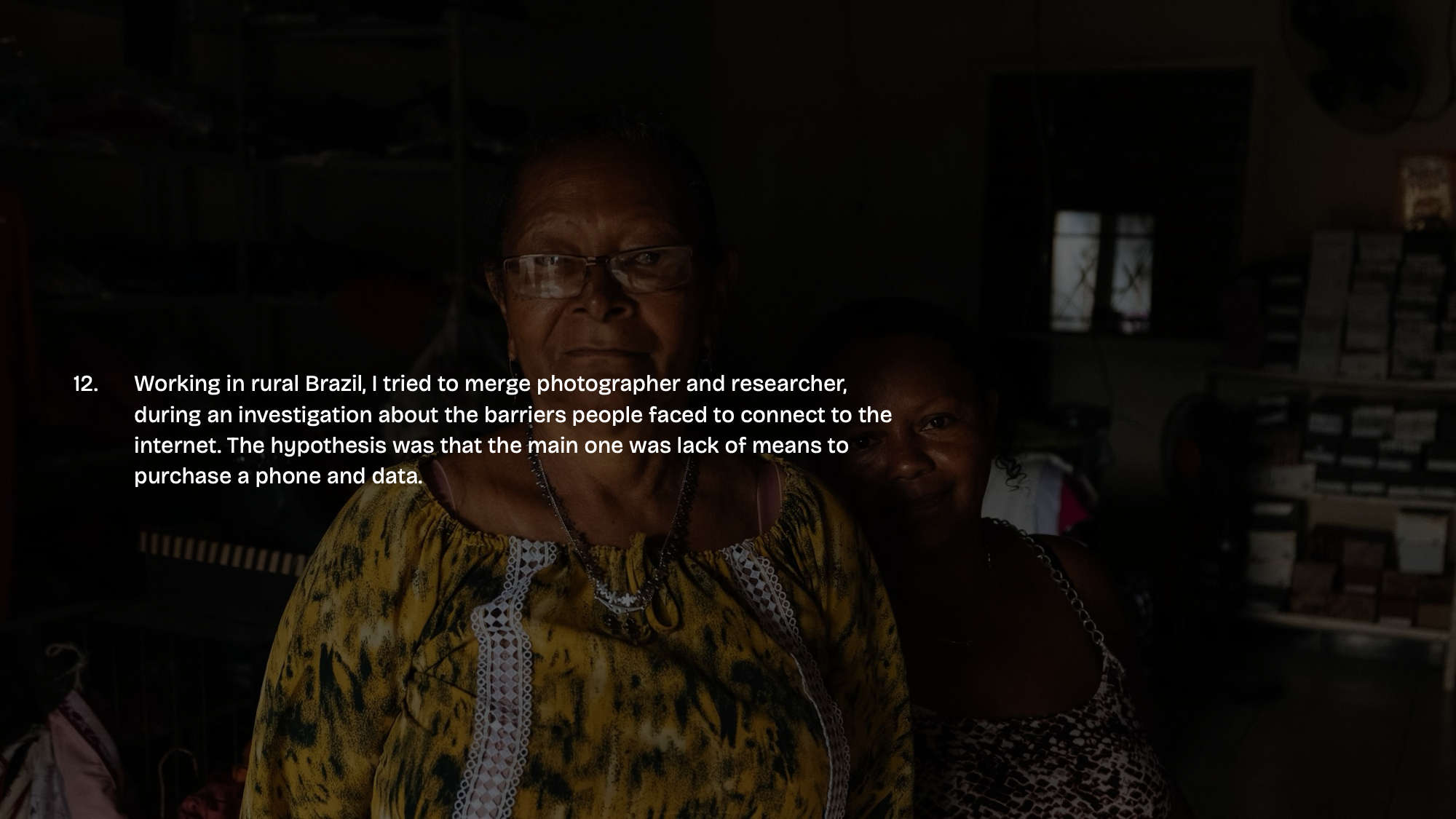
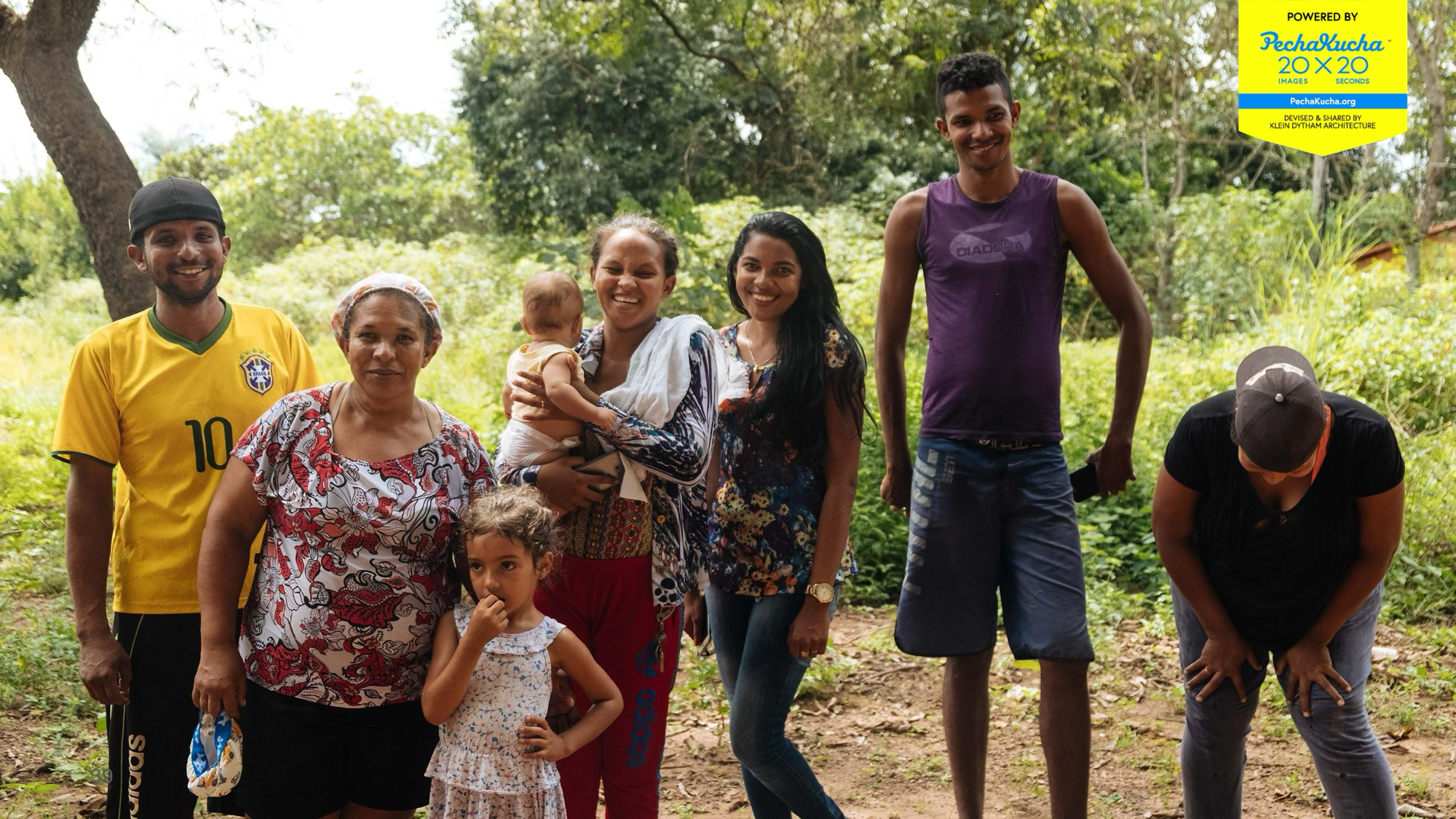
- Working in rural Brazil, I tried to merge photographer and researcher, during an investigation about the barriers people faced to connect to the internet. The hypothesis was that the main one was lack of means to purchase a phone and data.
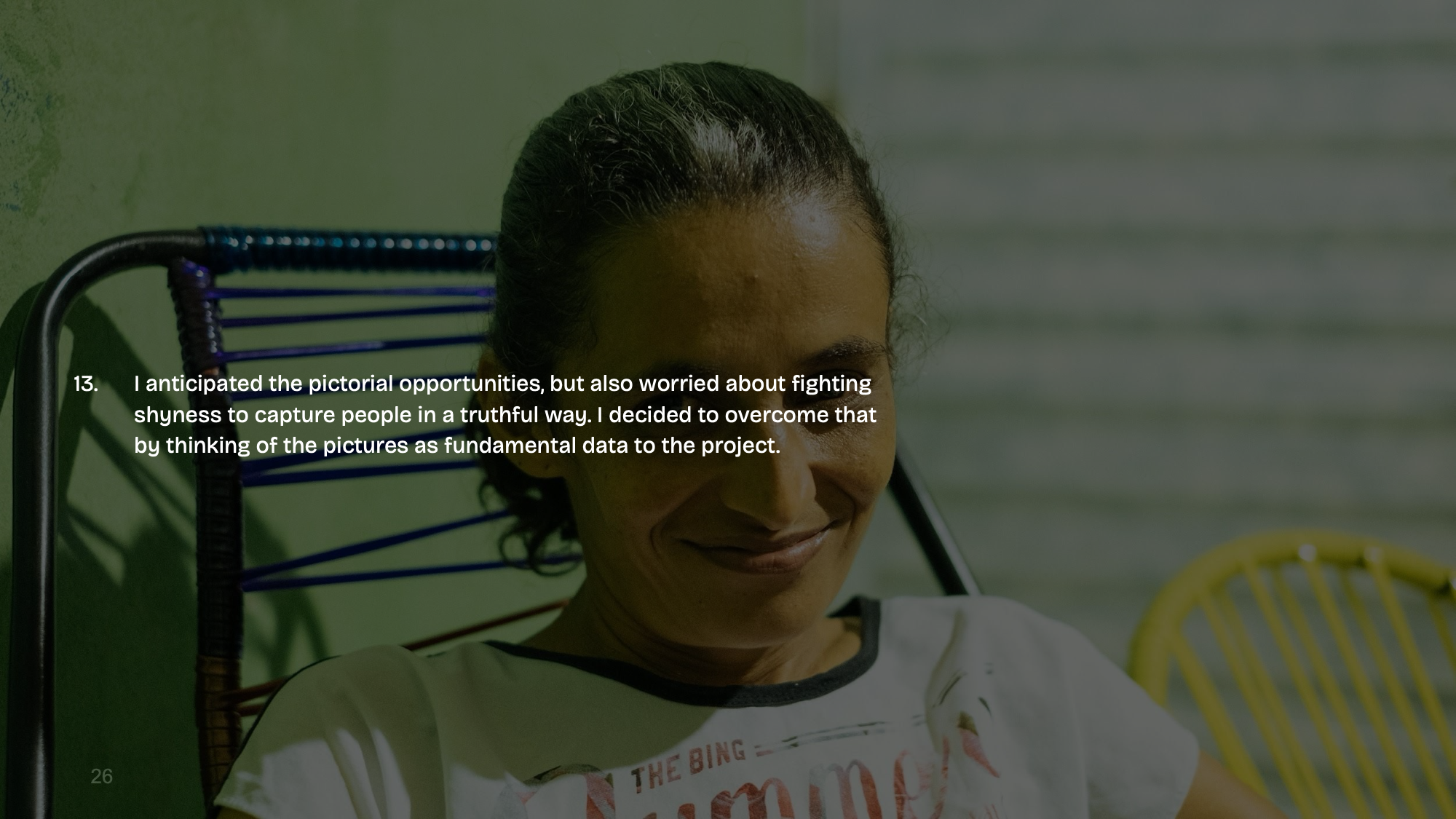
- I anticipated the pictorial opportunities, but also worried about fighting shyness to capture people in a truthful way. I decided to overcome that by thinking of the pictures as fundamental data to the project.
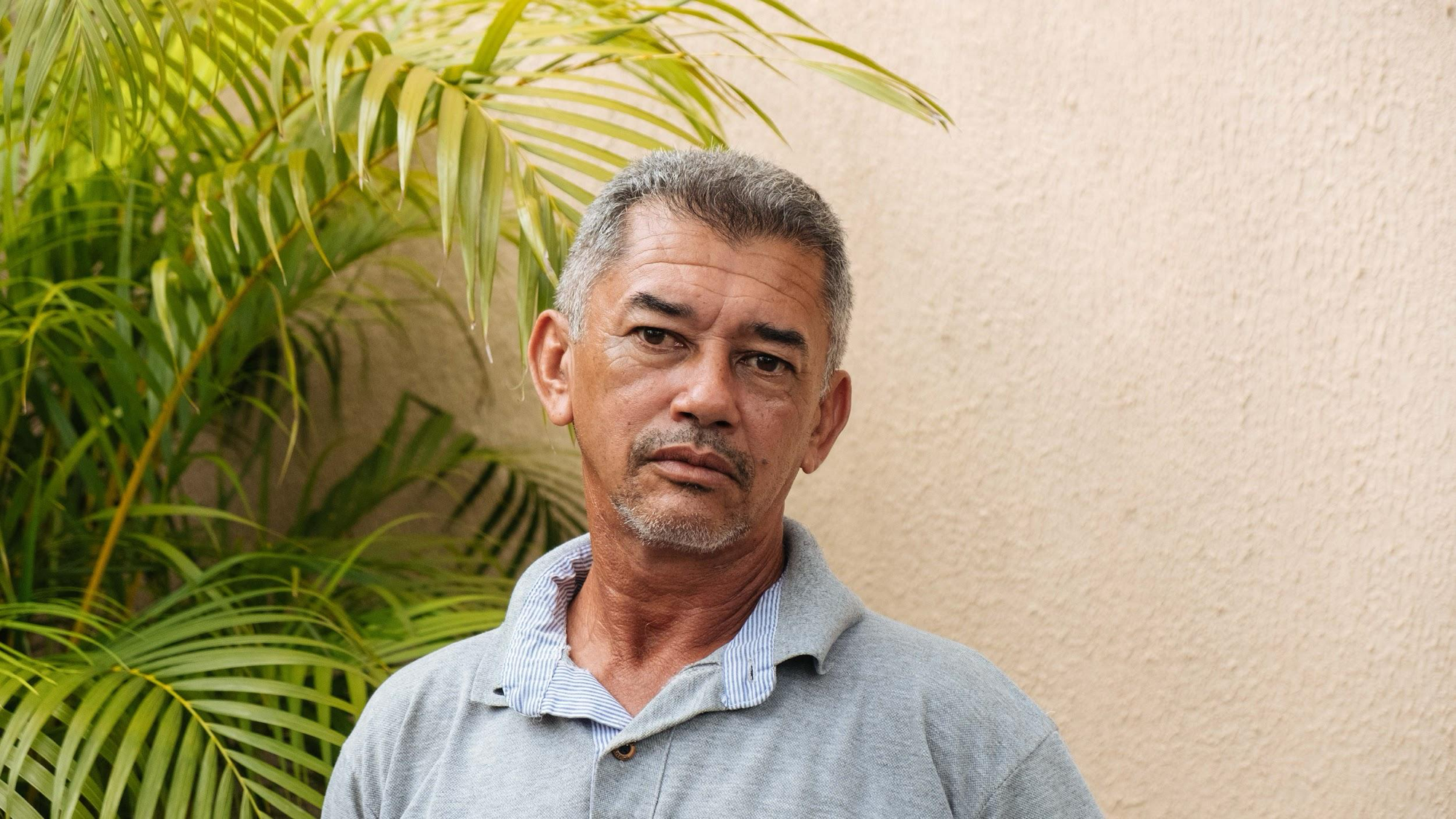
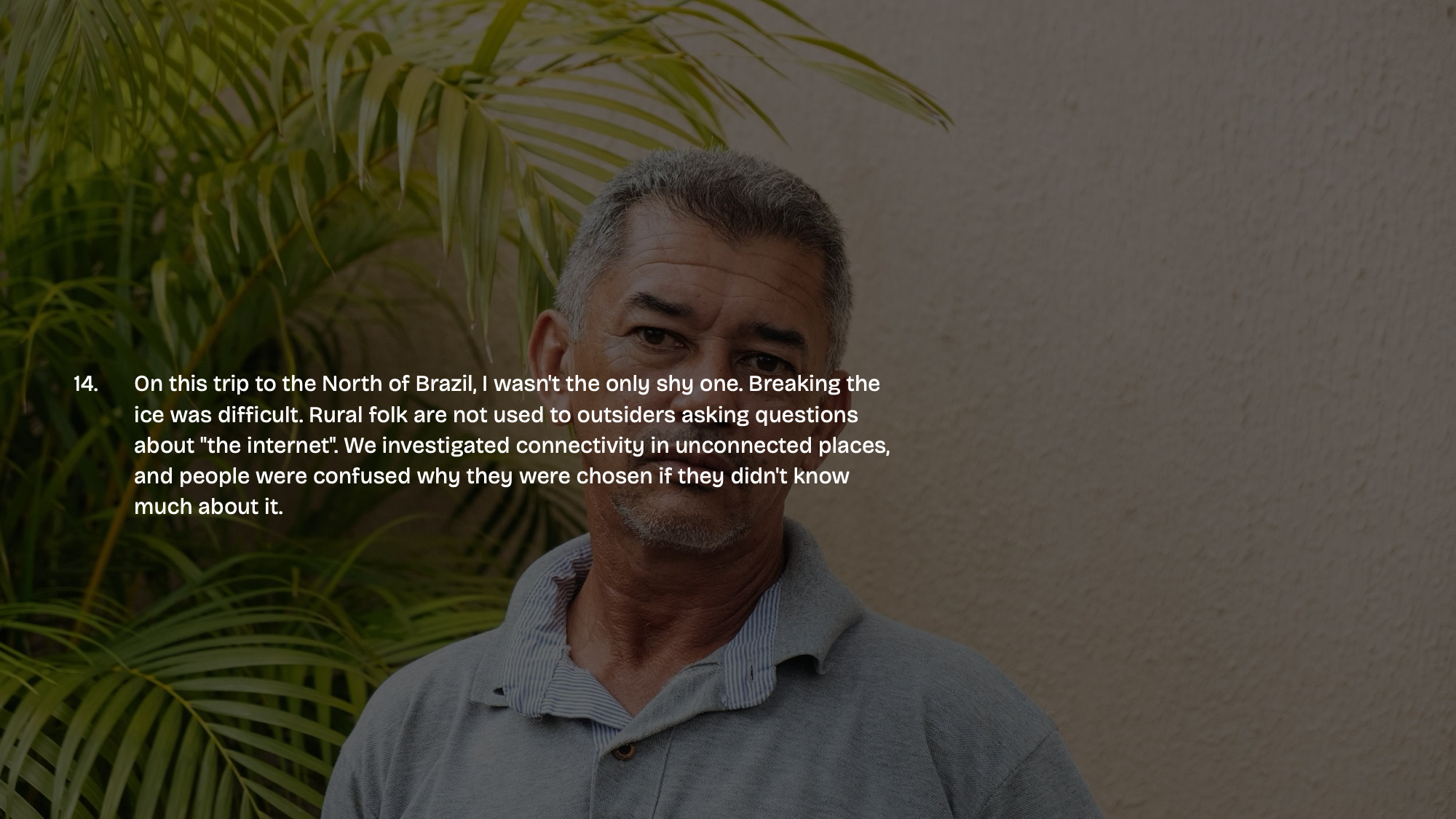
- On this trip to the North of Brazil, I wasn’t the only shy one. Breaking the ice was difficult. Rural folk are not used to outsiders asking questions about “the internet”. We investigated connectivity in unconnected places, and people were confused why they were chosen if they didn’t know much about it.
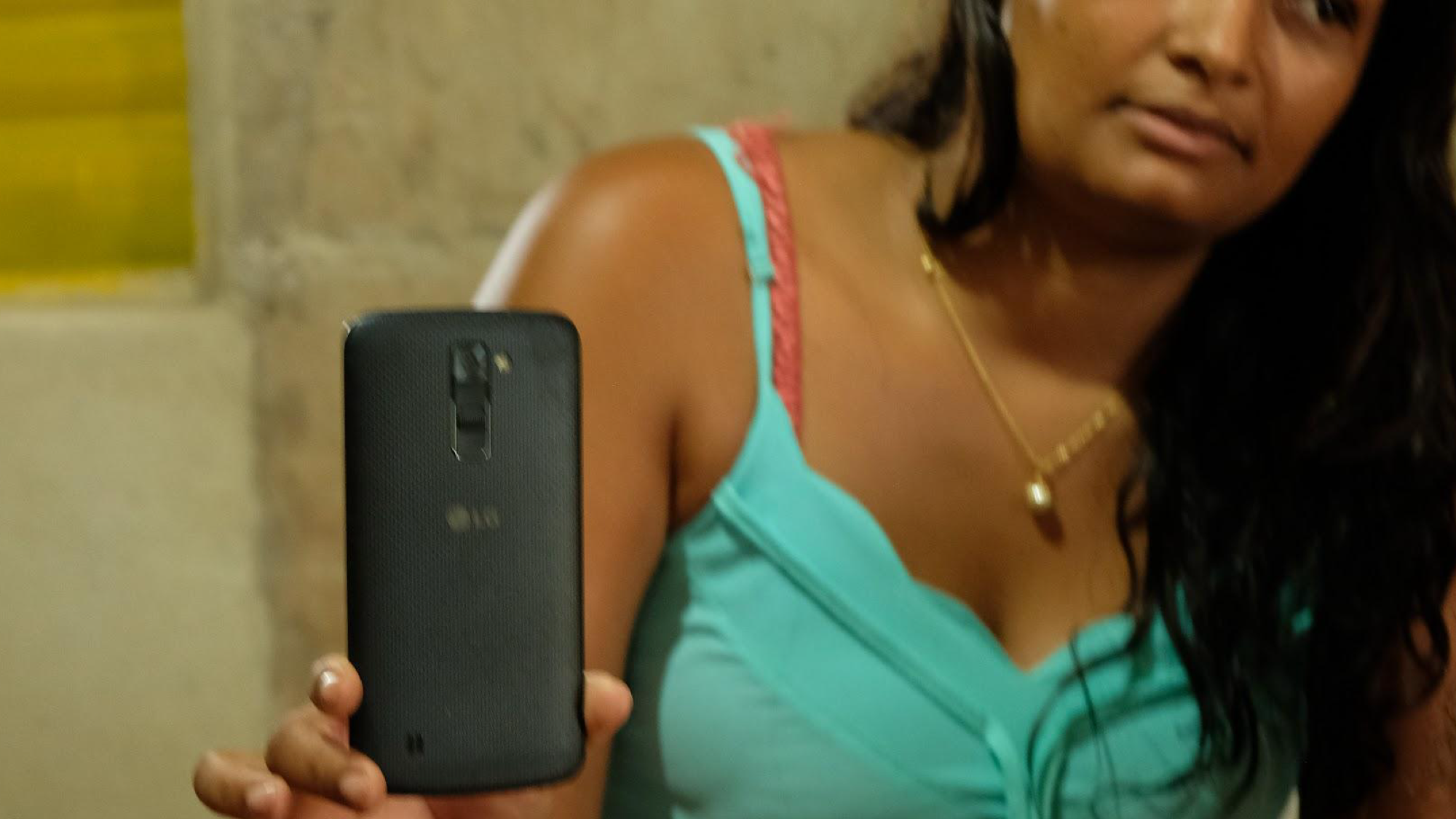
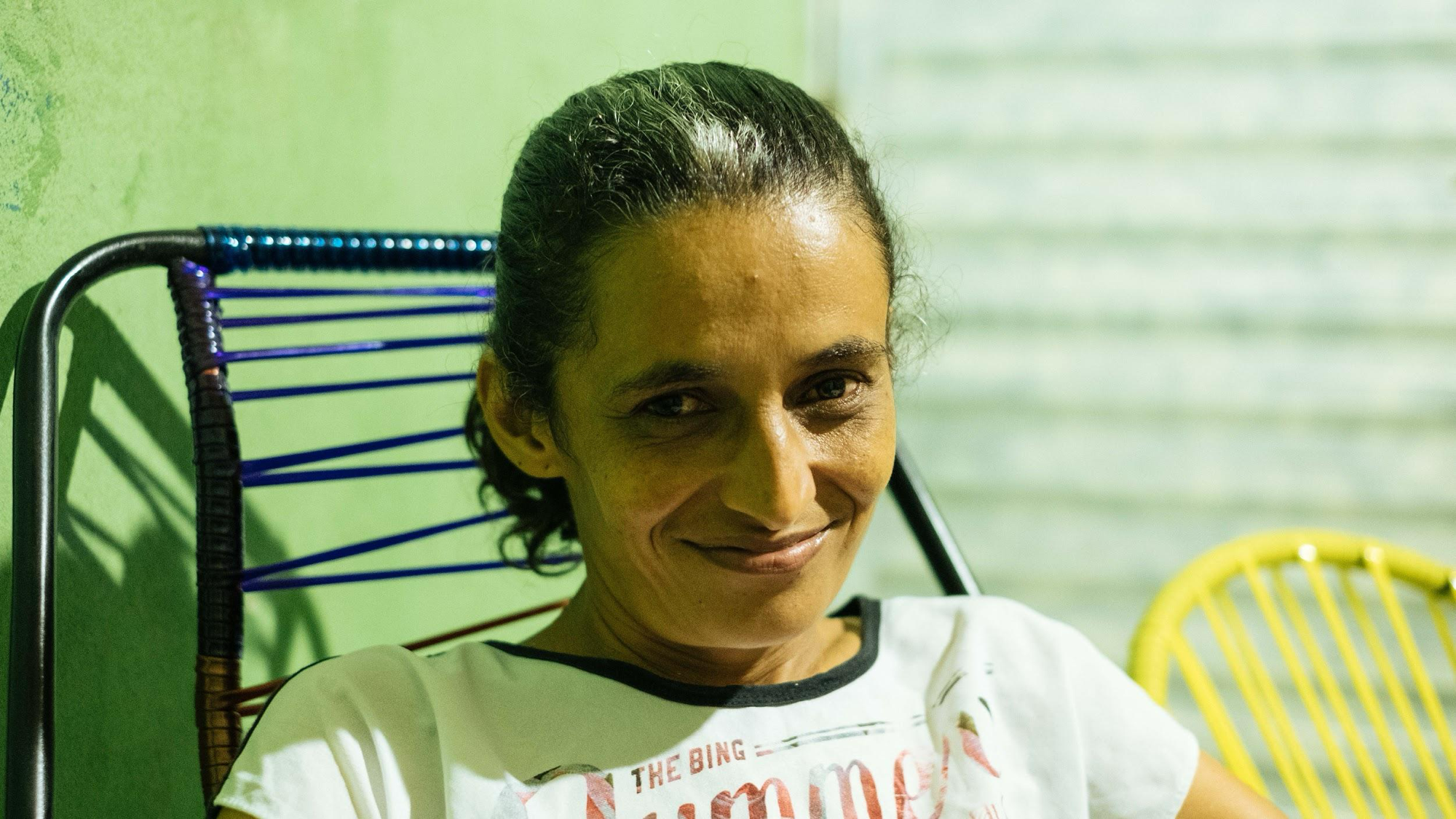
- Reassuring that their knowledge was not knowing much about it, a brief relationship was built. Each interaction gave me the chance to be an agent, stepping out of my comfort zone, to openly ask them to capture their portraits.
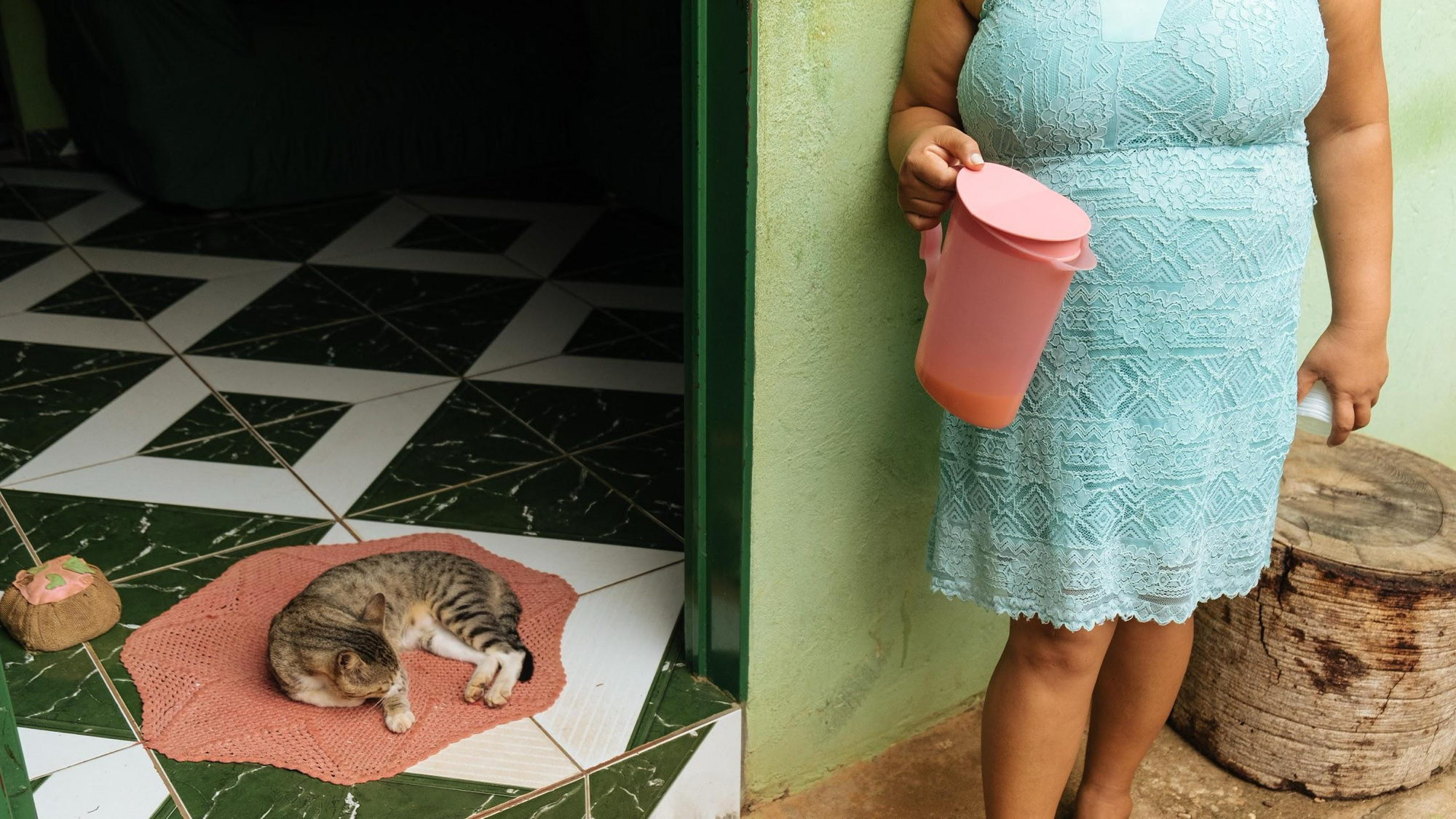
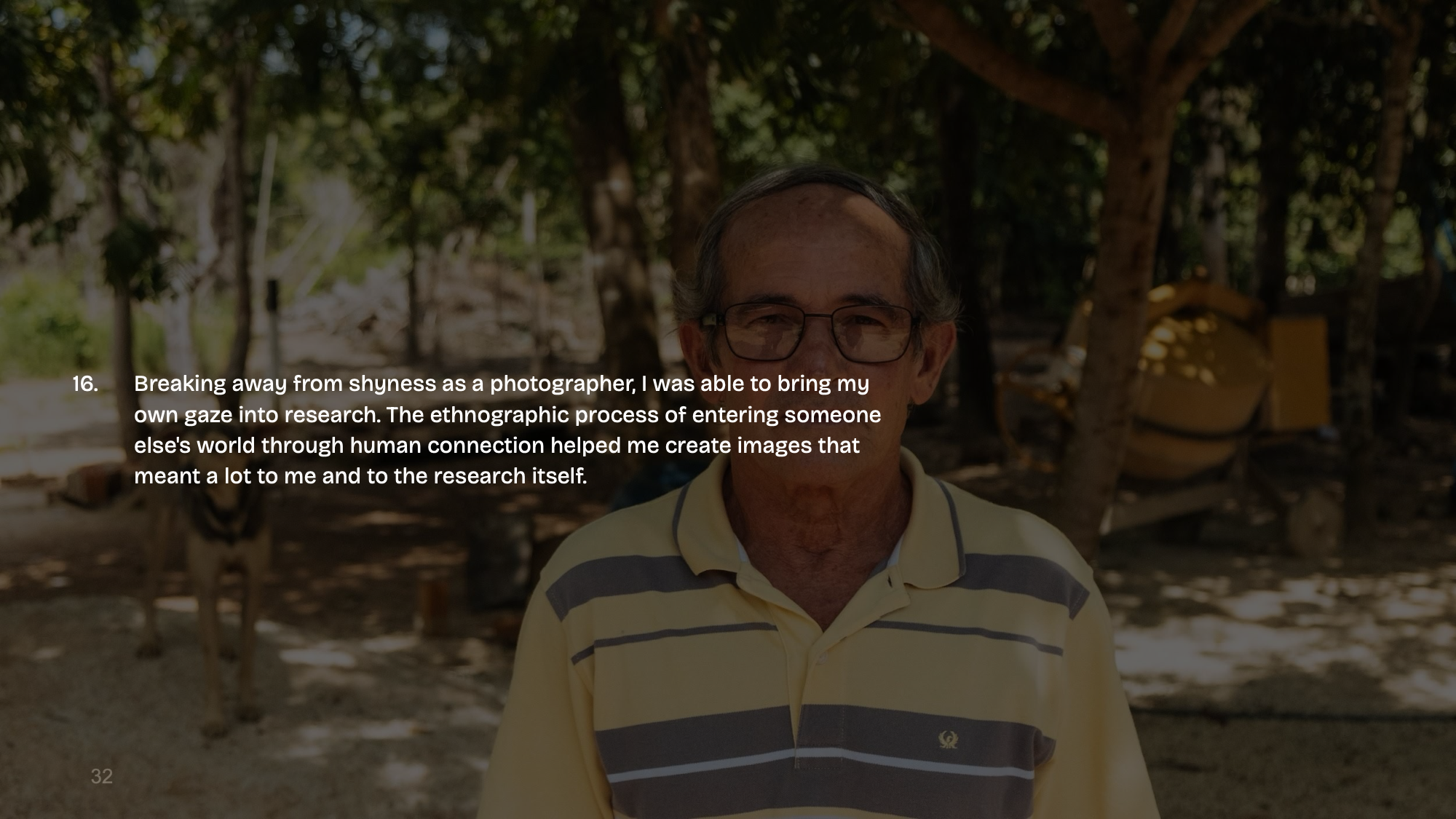
- Breaking away from shyness as a photographer, I was able to bring my own gaze into research. The ethnographic process of entering someone else’s world through human connection helped me create images that meant a lot to me and to the research itself.
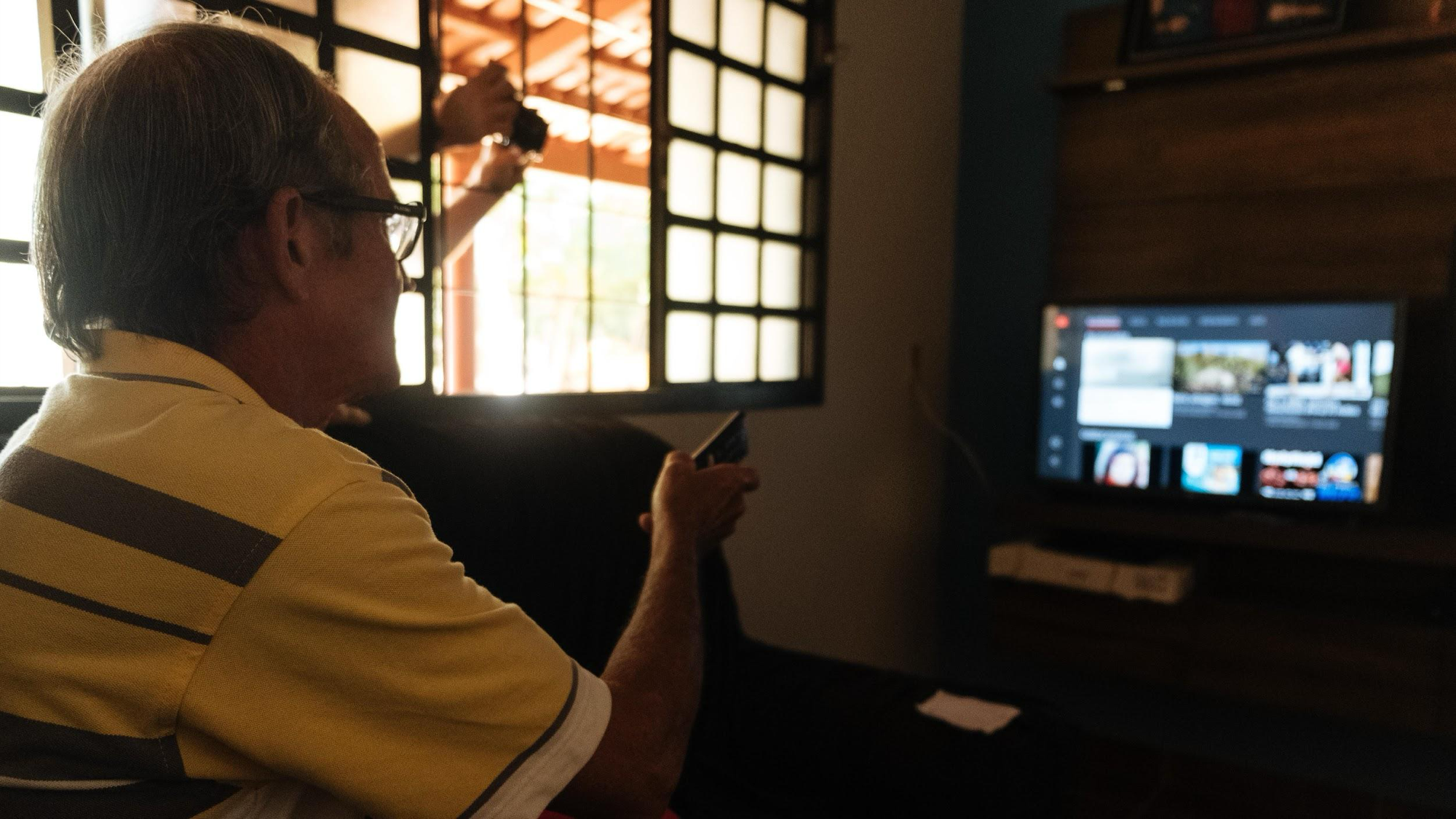
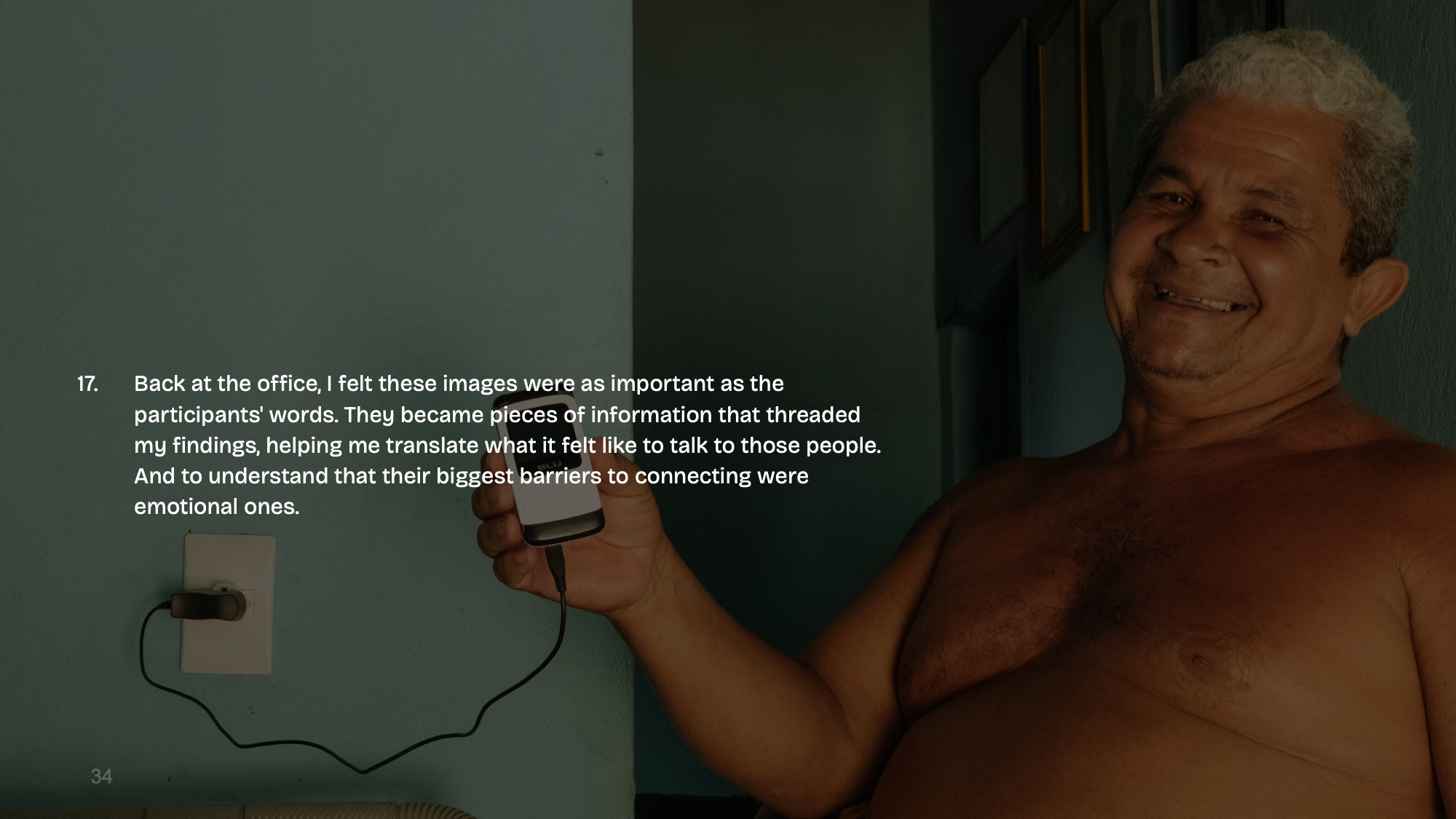
- Back at the office, I felt these images were as important as the participants’ words. They became pieces of information that threaded my findings, helping me translate what it felt like to talk to those people. And to understand that their biggest barriers to connecting were emotional ones.
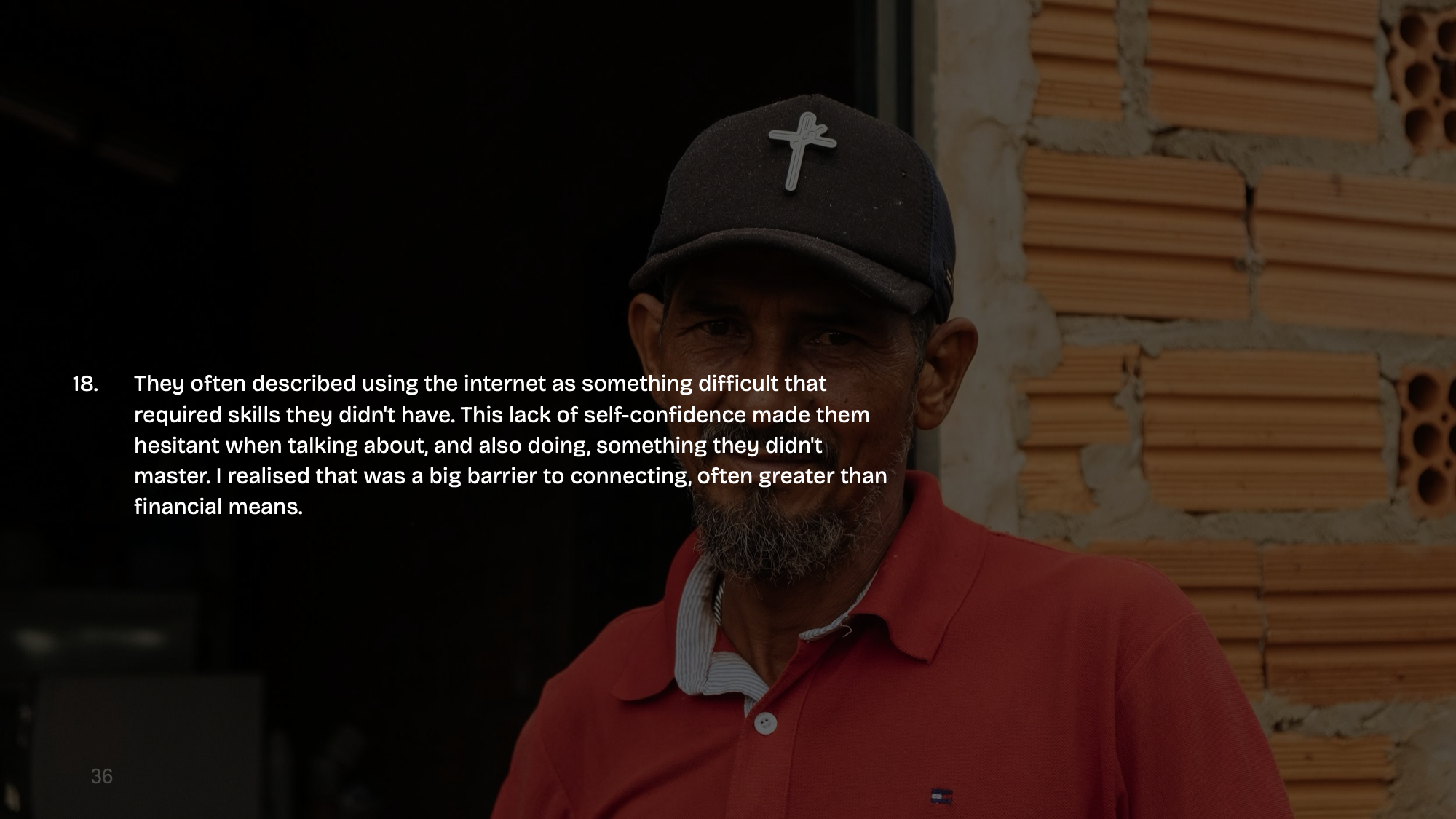
- They often described using the internet as something difficult that required skills they didn’t have. This lack of self-confidence made them hesitant when talking about, and also doing, something they didn’t master. I realised that was a big barrier to connecting, often greater than financial means.
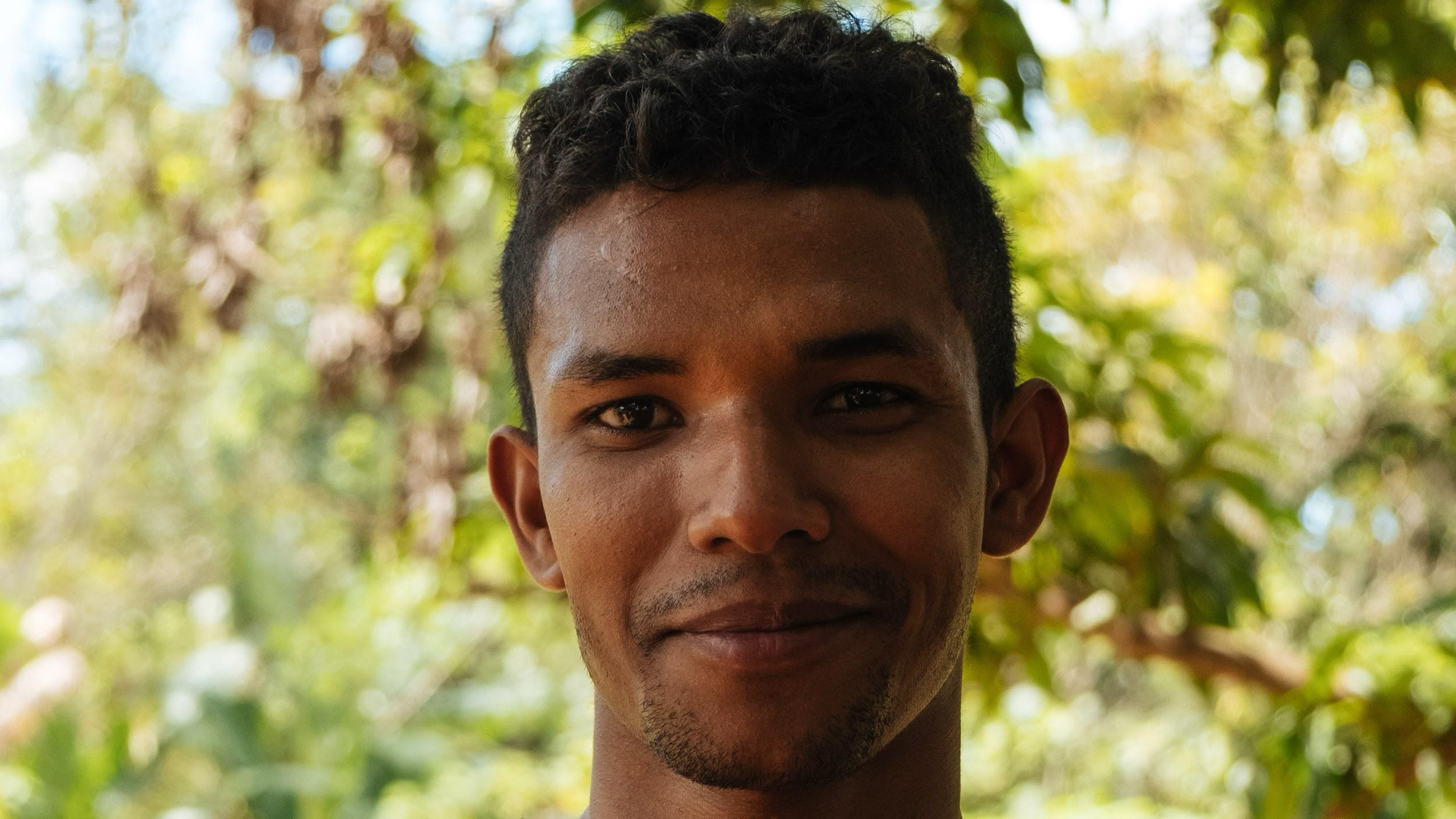
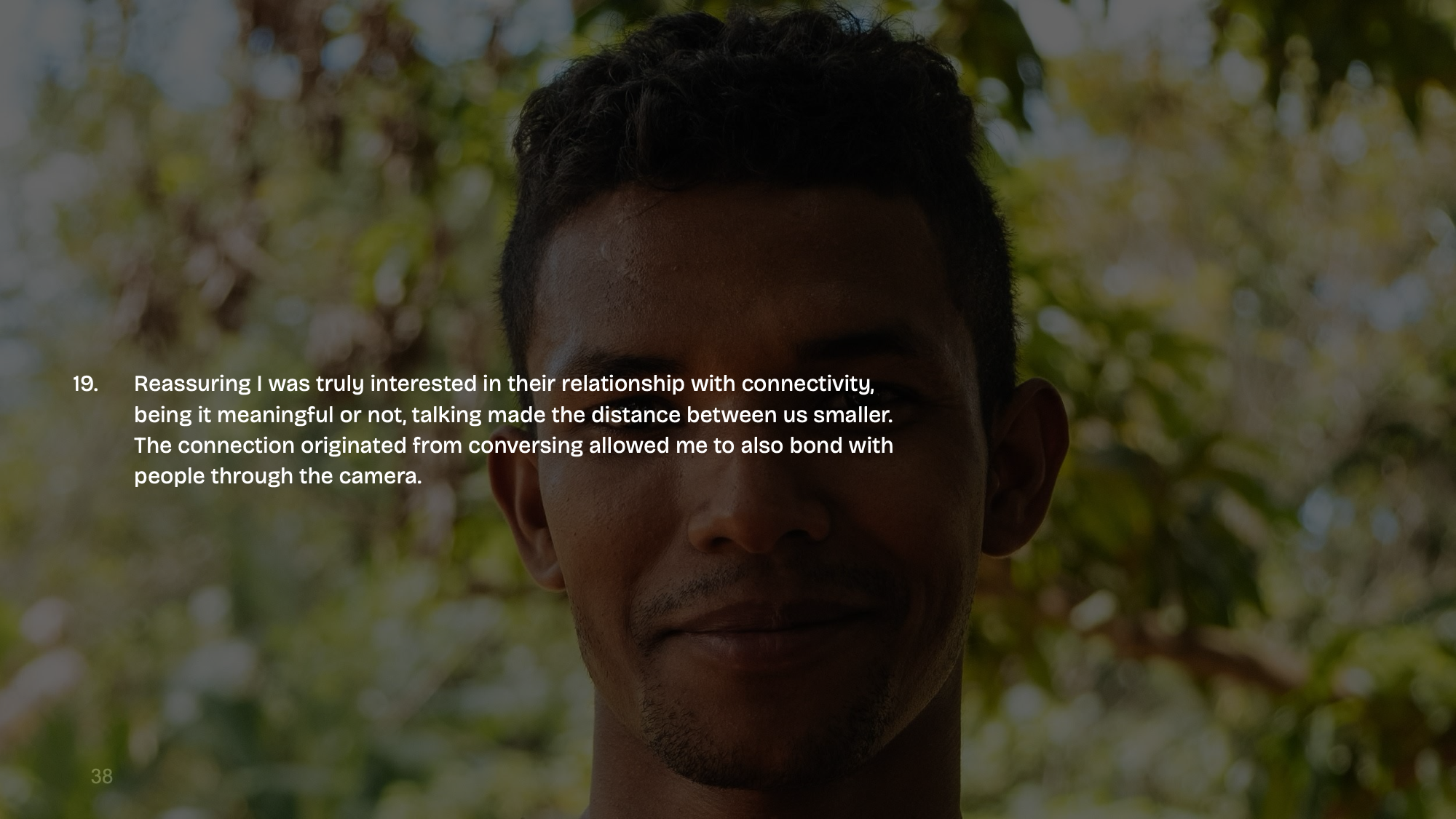
- Reassuring I was truly interested in their relationship with connectivity, being it meaningful or not, talking made the distance between us smaller. The connection originated from conversing allowed me to also bond with people through the camera.
- Registering rural Brazil with a subjective eye, the photographer conquered its space in the research, providing images that added meaning to the project. I realized the photographer in me lacked something fundamental from the researcher: the agency to initiate a bond with others.
 Gabriela Oliveira