ℹ️ Context
As a research consultant for QuesttoNo, I worked on the strategic product research for So.Si, a new shoe brand born from an innovation initiative to revamp Picadilly’s portfolio, one of Brazil’s largest footwear companies.
🧃 This was my first ethnography, where I overcame one of my social barriers of effortlessly going into other people’s houses.
Alongside another lead researcher, we explored women’s relationships with shoes: how they interact with them in store windows, how they organize them in their wardrobes, and how they wear them in different settings.
🗺 How did we plan it?
Step 1
Define our main question to investigate:
What are women’s needs and pain points when choosing, buying and wearing shoes?
🧃 There was also an underlying question, that hit personally to me and my research colleague: why do women tolerate uncomfortable shoes?
Step 2
Determine how to collect the information to answer our questions.
Key:
❤︎ qualitative
👋 ▸ see my role
🧃 This ended up being my very first design ethnographical research! I had to overcome a social barrier of going into unknown people’s houses, and still act nonchalant about it.
Step 3
Define target.
Women from São Paulo and Rio de Janeiro, from different social classes and professions.
Shoe-design expert.
01. In-depth interviews
Supporting role 👋
I assisted and executed house visits and in-depth interviews
with women from different backgrounds
in order to uncover unmet needs and pain points about shoe storing and wearing
and deliver insights for co-creation product design sessions
02. Shadowing
Supporting role 👋
I visited shoe stores
with women from different backgrounds
in order to uncover unmet needs and pain points about shoe shopping
and deliver insights for co-creation product design sessions
03. Mystery shopper
Supporting role 👋
I visited shoe stores
with my research lead, as consumers
in order to understand the shoe selling and shopping process and communication
and deliver insights for co-creation product design sessions
04. Expert interview
Supporting role 👋
I assisted in an in-depth interview
with a show designer
in order to map best practices of shoe design and market trends
and deliver guidelines for co-creation product design sessions
✨ What did we find?
KEY INSIGHT
Traditional Brazilian shoe sizing doesn’t accommodate many women’s feet.
Some need half-sizes that don’t exist, while others have feet of different sizes. Additionally, feet change throughout the day, swelling as women move through their busy routines.
Our findings led to a series of hands-on co-creation workshops where we threw different material shoes in the washing machine, deconstructed other pairs, and had our male designers walk in heels for the first time.
Our goal? To craft a shoe brand that seamlessly blends size flexibility, comfort, and style.
👡 What about the product?
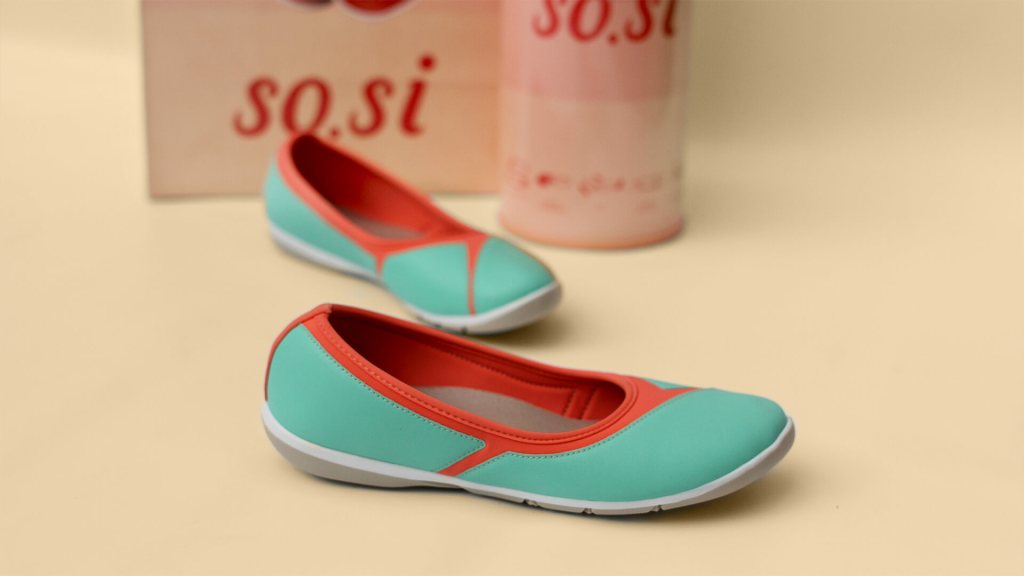
This led to the concept of an adaptable shoe. One that adjusts to slight variations in foot size and accommodates changes throughout the day, ensuring a perfect fit for both feet, from morning to night.
🧃 The video documents the design process, and at 0:19 you can see me in fieldwork!
Read more:
 Gabriela Oliveira